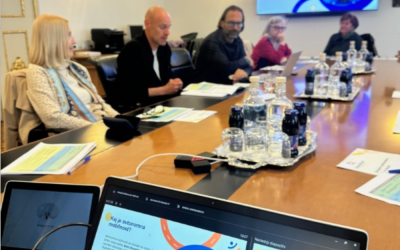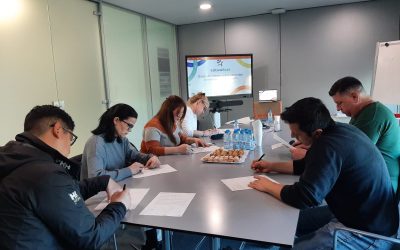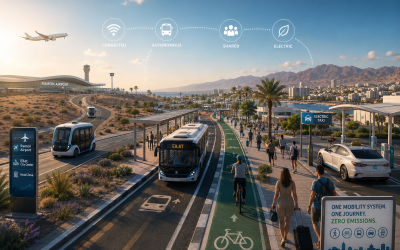
As part of CulturalRoad, a focus group with international students took place in Karlsruhe in spring. The session focused on attitudes towards autonomous vehicles and on the conditions under which such services may become acceptable in everyday life. Linked to a VR demo, the discussion moved beyond abstract opinions and included concrete reflections on interfaces and service design. The session also complements a second focus group with the broader civil population.
The student perspective was chosen deliberately: Karlsruhe is strongly shaped by universities, research institutions and an international student population. More than one in ten residents are students and almost one in five students at Karlsruhe’s higher education institutions are foreign nationals. Accordingly, participants came from different countries and brought experience from different transport systems and mobility cultures. Some also contributed technical perspectives from their studies, particularly on infrastructure, safety and system reliability. Together, these experiences made the group especially valuable for discussing how autonomous mobility may be understood by future users with diverse cultural and educational backgrounds.
Where perceptions of AVs come from
Participants associated Autonomous Vehicles (AVs) with ideas such as “future,” convenience and innovation, but also with uncertainty and lack of control. Their views were shaped by a wide range of influences, including science-fiction films, social media, news coverage and personal experiences with automated transport systems. Some referred to experiences with automated metro systems such as those in Sofia, while others drew on broader media narratives about electric and autonomous vehicles and their common intertwining. This showed clearly that perceptions of autonomous mobility are shaped not only by direct use, but also by cultural narratives, public debate and own studies. Referring back to the blog post title, they all have one thing in common: shaping perceptions of autonomous vehicles.
Why safety remains the key question
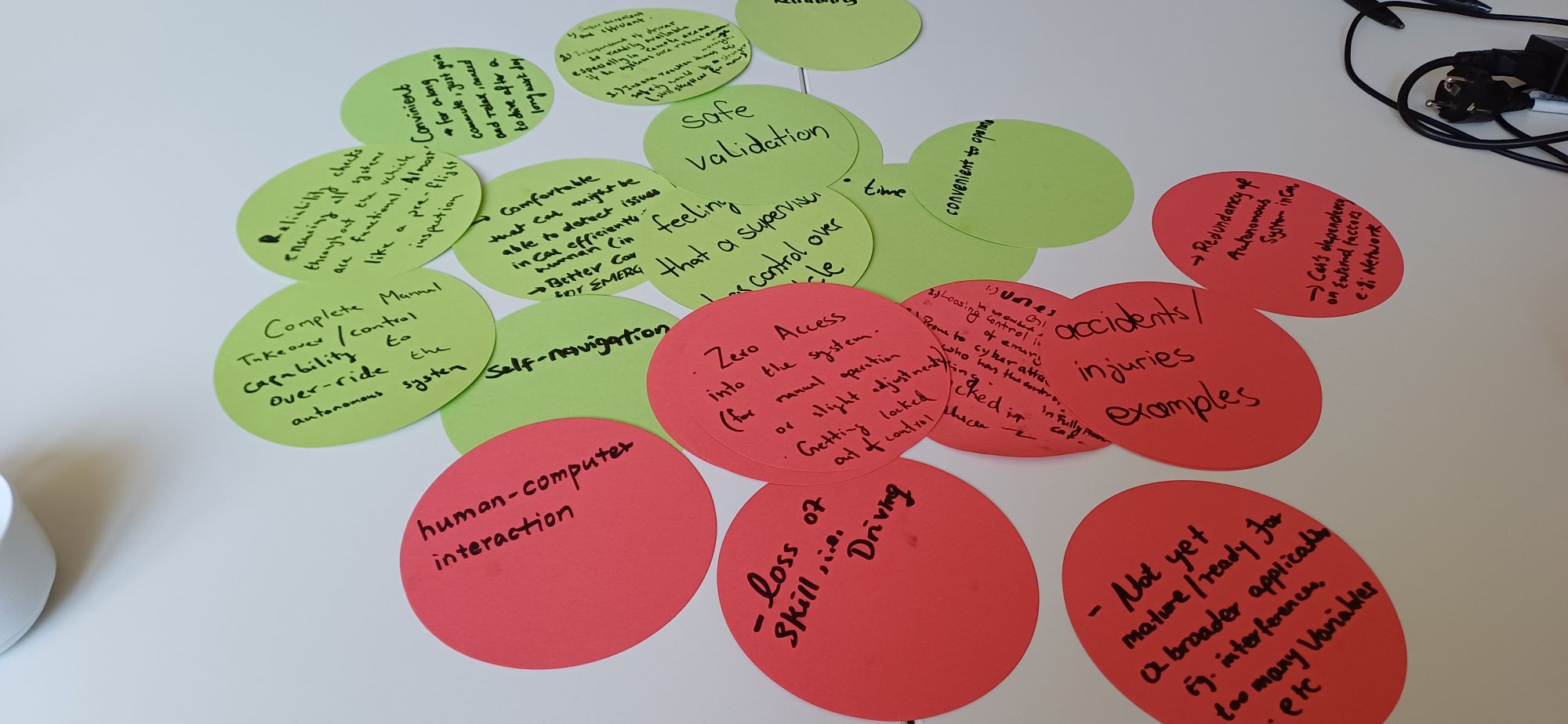
For some participants, safety was one of the main arguments in favor of automated mobility; for others, it was the strongest reason for hesitation. Several participants stressed that even a system described as “99.9% safe” would still not feel sufficient when human lives are involved. A recurring point in the discussion was the perceived importance of some form of human backup, whether through remote intervention, emergency systems or an operator who could step in if something went wrong.
Everyday situations, everyday users
At the same time, the discussion showed that acceptance depends on context. Autonomous shuttles were often perceived more positively than robotaxis, particularly in structured, urban or semi-controlled environments. On the other hand, participants noted that robotaxis could feel safer in certain situations, especially at night.
Participants were more open to autonomous mobility when it was discussed in relation to specific, realistic use cases such as commuting, travelling at night with unfamiliar drivers or fellow passengers, parking in tight spaces or getting around without access to a private vehicle. These examples showed that acceptance increased when automated services were seen as a way to address everyday mobility, insecurities or practical driving challenges. Talking about concrete situations made the technology feel more understandable and, for some, more acceptable.
The group also reflected on who might benefit most from autonomous mobility. Participants suggested that the typical user could include commuters, younger people without a driving license, people with physical disabilities and users who are comfortable with technology.
Tension between technological curiosity and practical caution
This led to a broader question of what kind of skills or knowledge future users may actually need. Participants noted that people with driving experience might in fact be more skeptical, because they are more aware of what can go wrong. By contrast, technical confidence and a basic understanding of how such systems work were often seen as more relevant than driving skills themselves.
Another interesting contribution of this group was that participants often approached the issue not only as everyday users, but also through technical or analytical lenses shaped by their studies. This became particularly visible in the discussion about service design and onboard information. Participants did not simply ask for reassurance in general terms; some wanted greater transparency about how the system works in practice. Suggested features included clear status information, visible safety mechanisms, simple manual controls and even troubleshooting insight during the ride, or some kind of status panel showing sensor outputs and system status, allowing users to better understand what the vehicle is “seeing” and whether all systems are functioning normally. This is a remarkable insight, because it suggests that at least some users may feel more comfortable not when technology is hidden in the background, but when relevant system information is made visible and understandable.
These comments underline that acceptance is shaped not only by engineering performance, but also by interface design, communication, privacy, security and the social experience of travel.
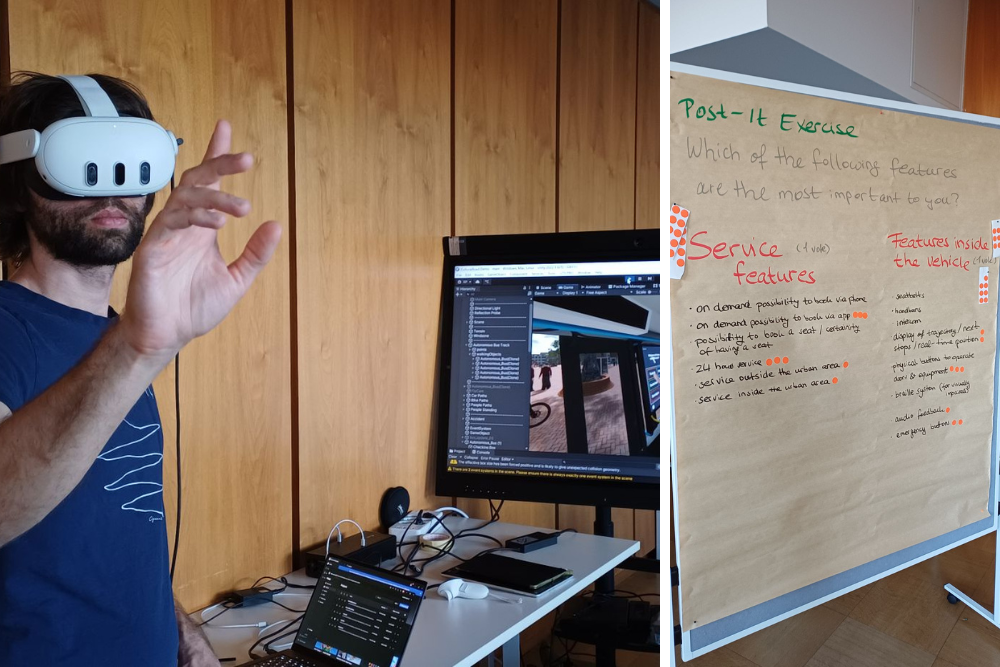
Overall, the focus group showed why the perspective of international students matters in Karlsruhe. Their responses combined openness to innovation with careful attention to safety, usability and inclusion.