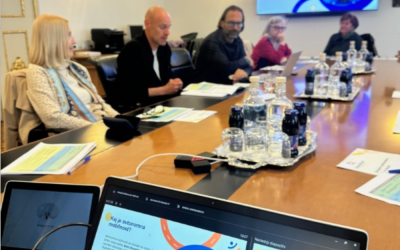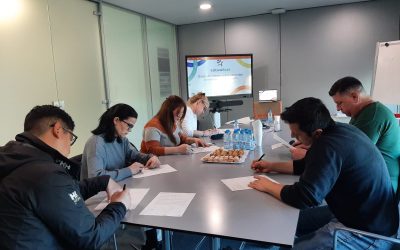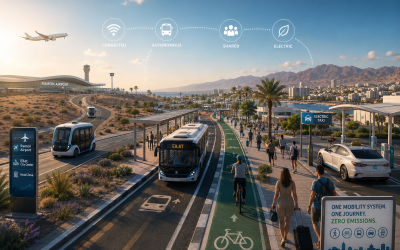

The CulturalRoad project hosted a webinar on 13 May 2026 focusing on its approach to engaging with local communities and ensure future automated mobility solutions reflect their needs and expectations.
The webinar brought together representatives from the project’s five demonstration sites for a roundtable discussion on their experiences with co-creation. Moderated by Guido Cantelmo (Technical University of Denmark – DTU), the panel included Xavier Sanyer (Barcelona Transport Authority – ATM), Dr. Maximilian Schrapel (Karlsruhe Institute of Technology – KIT), Špela Kranjc (Regional Development Agency of Ljubljana Urban Region), Ruth Anderson (Oxfordshire County Council), and Yaniv Shmuel (Eilat Municipality).
The CulturalRoad co-creation framework
CulturalRoad uses a two-step co-creation framework to ensure that Connected, Cooperative and Automated Mobility (CCAM) deployment responds to local needs. In the first step, service providers, technology developers, policy makers, and public authorities come together to provide input on effective and equitable CCAM deployment. Then, local citizens are involved to give stakeholders feedback based on their actual needs and concerns.
This approach is being tested in five demonstration sites in Catalonia, Karlsruhe, Eilat, Ljubljana, and the United Kingdom (Oxfordshire and West Midlands), covering urban, suburban, and rural environments, with a particular focus on underserved user groups including older people, people with disabilities, and those with lower incomes.
Learnings from the CulturalRoad demo sites
A consistent message from all demonstration site representatives was that engaging citizens from the start is essential. Understanding citizens’ needs helps ensure higher adoption rates by bringing diverse perspectives and making sure the technology developed matches local needs. For instance, focus groups held in Catalonia with older residents, people with low digital literacy, and non-native speakers helped identify specific needs that would otherwise have been missed. In Karlsruhe, virtual reality was used to make the technology more tangible for participants unfamiliar with it. A recurring and somewhat unexpected finding was that initial scepticism, particularly among elderly users, tends to turn into genuine curiosity and willingness to try new services, once people better understand how the technology works.
The discussion also addressed where CCAM can add the most value. All speakers agreed that CCAM services should not aim to replace conventional public transport but rather complement it through flexible services where public transport is difficult to operate efficiently. CCAM could help address first- and last-mile connections, support people that don’t have a driving licence, help manage shortage of drivers, and operate in rural and low-density areas not suited for traditional, larger vehicles.
Enabling CCAM deployment
Another point raised was that successful deployment requires more than technology. A shared strategic vision and the right business models are needed to ensure these new services are implemented in an equitable way. For instance, CCAM services can contribute to greater equity by reaching more rural, underserved areas, and deliberate choices about where and how services are introduced can help ensure they deliver broader benefits to users. A shared vision adopted by all relevant stakeholders would also enable the implementation of the physical and digital infrastructure required.
On regulation, speakers emphasised the need for a harmonised regulatory framework to enable deployment beyond local pilots. This includes clear rules on safety, liability, and data exchange, among others. Regulation should enable new services, not act as a barrier to their deployment.
Missed the webinar? The recording is available below.