The ITS European Congress, held in Istanbul from 27 to 29 April 2026, brought together leading experts in ITS from across Europe and beyond. Organised by CulturalRoad coordinator ERTICO – ITS Europe, the ITS Congress provides a platform for projects, policymakers, industry representatives, and researchers to exchange knowledge and shape the future of mobility.
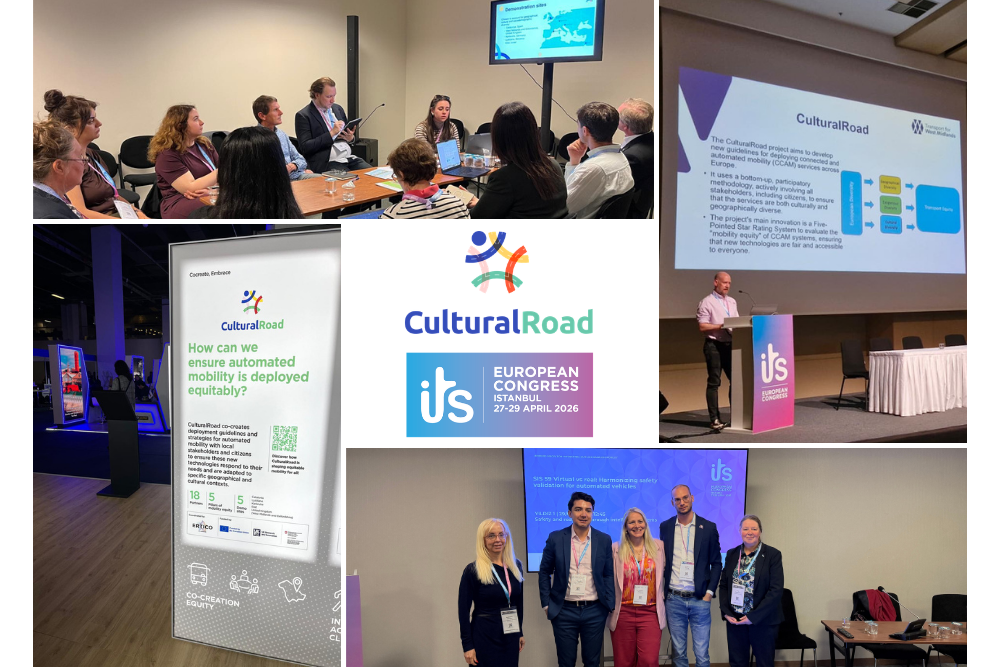
Throughout the congress, CulturalRoad was represented at the ERTICO stand, where attendees had the opportunity to learn more about the project and its approach to ensuring that connected, cooperative and automated mobility (CCAM) solutions are deployed in an equitable way.
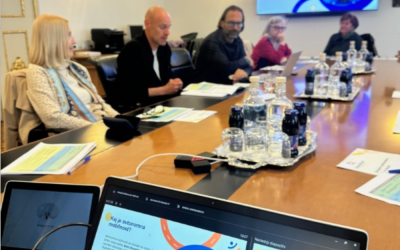
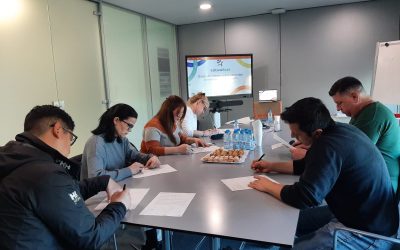
Training Session: Practically Considering Diversity and Inclusion for Future Automated Public Transport Services
CulturalRoad co-organised a dedicated training session titled “Practically Considering Diversity and Inclusion for Future Automated Public Transport Services”, together with sister project Diversify-CCAM and SINFONICA. The session aimed to offer congress participants a practical, hands-on training addressing one of the more often underestimated challenges in the transition to automated mobility: ensuring that future transport services are genuinely accessible and equitable. Drawing from examples from the three projects and their methodologies to address user needs and concerns regarding the deployment of new CCAM services, the session represented a unique opportunity for participants to get practical guidance and recommendations and exchange with other participants based on their own experiences. The session was moderated by Miranda Quijano Monzón and Andrew Winder (ERTICO – ITS Europe), and Victor Ferran (Bax).
Discussions explored a range of practical considerations for inclusive service planning. Participants highlighted the potential of CCAM to fill genuine mobility gaps by enabling entirely new services that did not previously exist. However, these services should be equivalent to existing public transport in terms of frequency, speed, and ability to attract different users. Regarding fares and ticketing, the conversation stressed the need to offer different payment methods that do not exclude people with vulnerabilities, non-smartphone users, or occasional travellers. Similarly, where hailing or booking is required, alternatives must be available that do not require a smartphone. In cases of on-demand services, participants agreed that it remains difficult to decide which users or situations to prioritise. Linked to this, participants stressed the importance of carefully selecting the use cases that automated mobility services are designed to address, ensuring they respond to real needs rather than adding vehicles to already congested roads. Ensuring that the voices of relevant stakeholders and users are heard throughout the design and implementation process of CCAM services is therefore essential. CulturalRoad adopts a co-creation participatory framework, organising workshops with stakeholders and focus groups with diverse user groups, including vulnerable users, to ensure their needs are taken into account.
SIS 52: CCAM readiness: empowering cities, implementers and citizens
CulturalRoad was also represented in Special Interest Session (SIS) 52, which focused on how cities and mobility stakeholders can assess and build their readiness level for CCAM deployment. Matthew Shelton (Transport for West Midlands) presented CulturalRoad as part of ongoing CCAM projects in the West Midlands. He highlighted the project’s Five-Pointed Star Rating System, a practical tool designed to help evaluate the level of equity of CCAM systems within their specific contexts and environments, based on the five pillars of safety, inclusivity, user acceptance, network optimisation, and psychological factors.
The session brought together speakers from EU-funded projects CCAMbassador and RESKILLING, exploring how capacity-building activities and readiness assessments can be combined to help cities and regions move toward responsible and scalable CCAM deployment.
SIS 59: Virtual vs real: harmonising safety validation for automated vehicles
In SIS 59, Ruth Anderson (Oxfordshire County Council) focused on how to ensure automated vehicles are both safe and equitable for all users, presenting the CulturalRoad methodology and participatory framework to ensure that CCAM deployment reflects the diverse needs of its users for more social acceptance. She also emphasised the importance of V2X resilience as key for road safety and discussed infrastructure needs and the risks of excluding certain groups from access to automated services, highlighting the need to design services that are safe, accessible, reliable and affordable from the start.
The session also featured insights from the CERTAIN and PoDIUM projects.
The ITS European Congress 2026 provided a valuable opportunity for CulturalRoad to engage with the wider CCAM and ITS community, share insights from its initial results, and contribute to conversations to help ensure that the future of mobility works for all users.