When we talk about Connected and Automated Mobility (CAM), conversations often gravitate toward sensor ranges, computational redundancy, and cutting-edge software stacks. Yet for the public bodies responsible for streets, transport networks, and community well-being, the most critical question is fundamentally human: How do these technologies serve the communities they operate in?
In our recent joint paper, From Trials to Transformation? A Local Authority Perspective on Connected Automated Mobility—co-authored by Transport for West Midlands (TfWM) alongside colleagues from Solihull Metropolitan Borough Council and the Greater Cambridge Partnership, we laid out an unvarnished view of what it takes to move automated vehicles from ring-fenced pilot schemes to an integrated public transport reality.
For those of us working within the CulturalRoad project, the white paper’s core findings resonate deeply. As the West Midlands/Oxfordshire demo site continues to test and validate CCAM frameworks on the ground, the paper underscores why technical readiness is meaningless without social readiness, local governance, and transport equity.
Moving beyond “tech-push”: automated mobility as a public service
The white paper addresses a central tension in the current ecosystem: while private sector investment is racing to prove technological feasibility, public authorities must ensure that CAM deployment doesn’t simply cater to commercial corridors or duplicate well-served routes.
Instead, the paper argues for a bus-like, mass-transit-first approach, deploying shared, automated public transport services (APTS) that plug connectivity deserts, bridge first-mile/last-mile gaps, and operate under clear civic objectives.
This philosophy mirrors CulturalRoad’s founding premise. Automated mobility is not purely a technological feat; it is a social, structural intervention. If CCAM does not actively improve access for underserved neighbourhoods, it risks exacerbating existing transport inequalities rather than resolving them.
The CulturalRoad Five-Pillar Equity Framework in action
CulturalRoad evaluates automated deployment against a Five-Pointed Star Rating System based on core equity pillars. The local authority white paper effectively articulates the practical, policy-level hurdles that directly map to these pillars:
- Inclusivity & Acceptance:
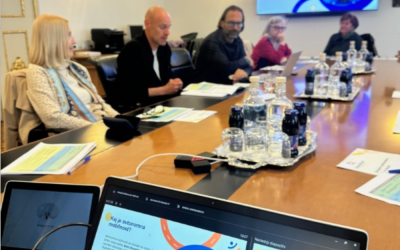
The paper calls for transparent learning mechanisms and participatory deployment. Without community co-design, CCAM risks alienating the very demographics that stand to gain the most, such as older adults, non-drivers, and lower-income commuters. CulturalRoad’s demonstration site workshops and citizen focus groups are operationalising this exact need by diagnosing public trust and psychological barriers before vehicles hit commercial service.
- Network Optimisation & Public Sector Leadership:
A key recommendation of the paper is the need for coordinated, national-to-local strategic alignment. Local authorities cannot be passive bystanders waiting for private operators to deploy; councils need standardisation, digital infrastructure support, and clear regulatory tools to integrate CAM into wider Urban Traffic Control (UTC) and regional transit networks.
- Safety & Psychological Factors:
Trust is fragile. The white paper highlights that inconsistent reporting, closed testing silos, and fragmented data slow down public acceptance. Establishing institutional accountability is essential to building the long-term confidence required for communities to embrace autonomous transit.
Grounding European research in real-world delivery
As one of CulturalRoad’s active demonstration sites, the West Midlands is using these exact principles to bridge the gap between high-level policy and real-world deployment.
The practical lessons captured in the white paper, drawn from hands-on pilot environments across Solihull and the wider region, feed directly into CulturalRoad’s bottom-up guidelines. By uniting local authority operational realities with European-wide research across partner sites in Catalonia, Karlsruhe, Ljubljana, and Eilat, we can ensure that future regulatory frameworks reflect the messy, complex realities of physical roads and diverse community needs.
The road ahead: collaborative, coordinated, community-led
If we want automated mobility to deliver true public value, we cannot leave adoption to chance. As the white paper concludes, achieving the transition from trials to transformation requires:
- Strong public sector stewardship to anchor deployments in social and environmental goals.
- Standardised operational specifications for shared, accessible automated passenger services.
- Continuous, structured co-creation with citizens to ensure services reflect local cultural and geographic contexts.
Through initiatives like CulturalRoad and the proactive collaboration of forward-thinking local authorities, we are laying the groundwork for an automated mobility landscape that is not just technologically viable, but demonstrably fair, trusted, and inclusive.