When we think about the future of mobility, we often imagine self-driving vehicles, artificial intelligence, advanced sensors and digital technologies. However, the development of automated mobility is far more than a technological challenge. An equally important question is whether people will accept these solutions, trust them and use them in their daily lives.
This is one of the key ideas behind CulturalRoad, in which the Regional Development Agency of the Ljubljana Urban Region (RDA LUR) is a partner. The project explores how different cultural, social and geographical contexts influence the acceptance of automated mobility and how innovative mobility solutions can be better adapted to people’s needs.
Technology alone is not enough
Automated mobility has the potential to improve road safety, reduce congestion, optimise transport systems and provide better mobility options for older adults, people with disabilities and residents of areas with limited public transport.
Yet technological excellence alone does not guarantee success. Even the most advanced solution will not achieve its full potential if users do not trust it or if it fails to address their everyday mobility needs.
People have different expectations, habits and experiences when it comes to adopting new technologies. While some may quickly embrace automated mobility, others may remain cautious or sceptical. Understanding these differences is therefore essential for the successful deployment of automated mobility services.
People at the heart of innovation
CulturalRoad is built on the idea that citizens, local communities and stakeholders should actively participate in shaping the future of automated mobility. Rather than developing solutions independently of end users, the project promotes a co-creation approach that brings together public authorities, researchers, businesses and citizens.
This collaborative process helps identify the needs of different user groups, understand concerns and design solutions that are more inclusive, practical and socially acceptable.
It is equally important to recognise that mobility solutions cannot simply be copied from one region to another. What works well in a large metropolitan area may not be suitable for smaller towns or rural regions. For this reason, CulturalRoad includes several demonstration sites across Europe and Israel, where partners test different approaches and exchange experiences in diverse cultural and transport environments.
The role of the Ljubljana Urban Region
The Ljubljana Urban Region is Slovenia’s largest employment and transport hub, attracting a significant number of daily commuters. This creates challenges for the regional transport system and highlights the need for innovative, sustainable and inclusive mobility solutions.
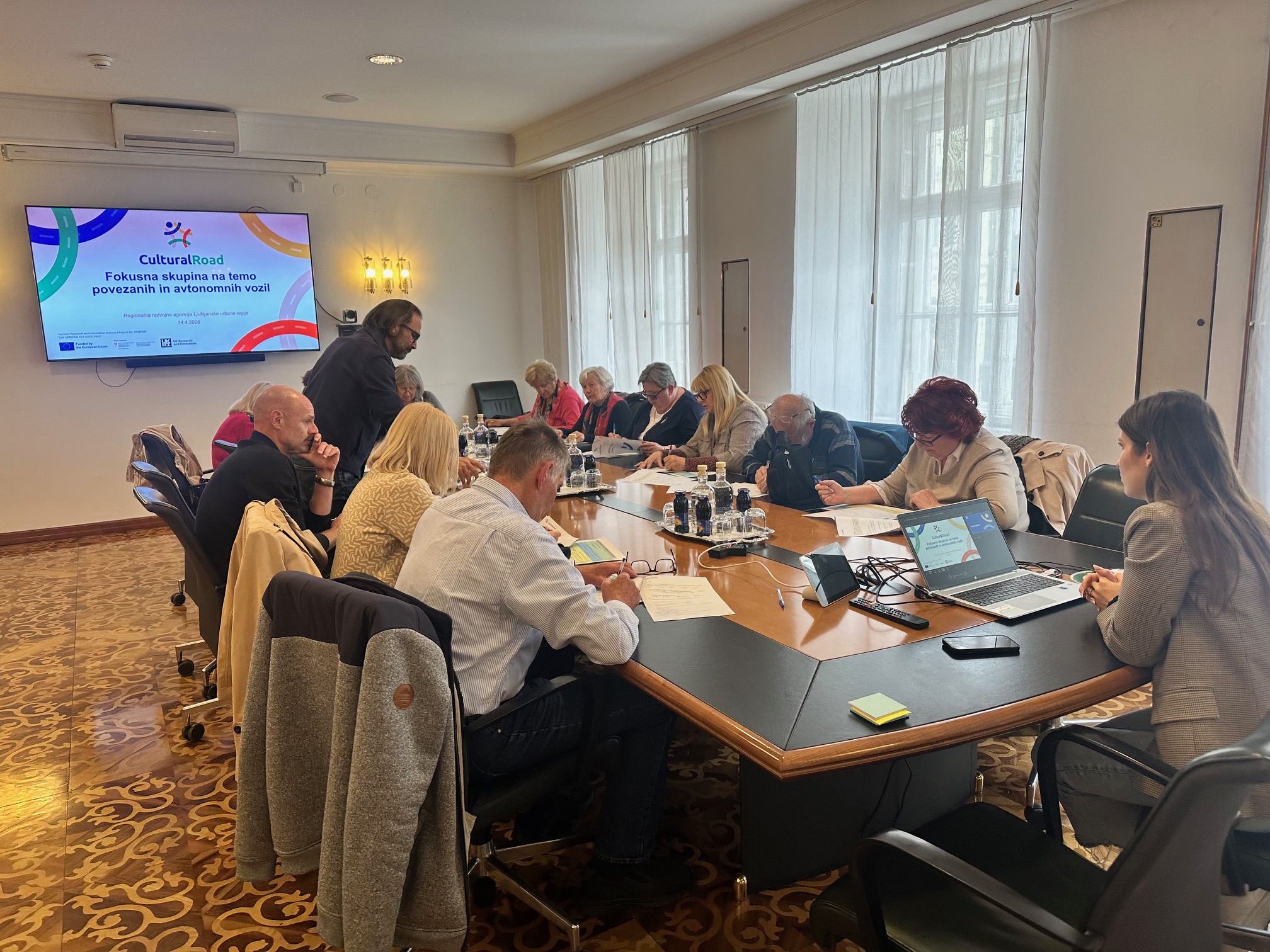
Within the CulturalRoad project, RDA LUR is exploring how automated mobility can contribute to a more accessible and user-centred transport system. As part of the co-creation approach, RDA LUR has already engaged with stakeholders and citizens through workshops, interviews and focus groups to better understand their expectations, concerns and needs regarding future mobility solutions.
The insights gathered will support the development of recommendations for the region and help ensure that automated mobility solutions are designed around the needs of the people who will use them.
Building the future of mobility together
The future of automated mobility is not determined by technology alone. It also depends on trust, collaboration and a deep understanding of people’s needs.
If innovative mobility solutions are to improve everyday life, they must be developed together with the people who will use them. Only then can technological innovation become a safe, inclusive and widely accepted part of everyday mobility.
CulturalRoad reminds us that the future of mobility is shaped not only by algorithms and vehicles, but above all by the people they are designed to serve.