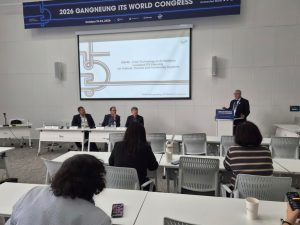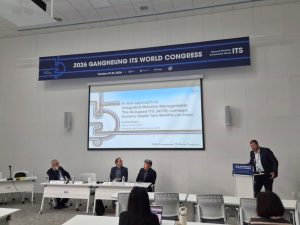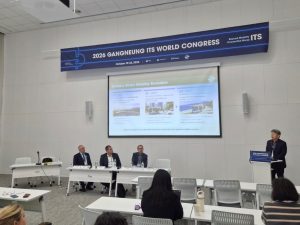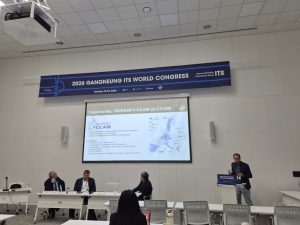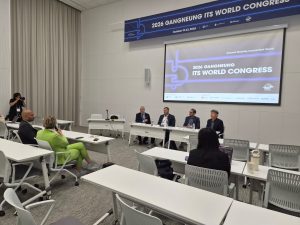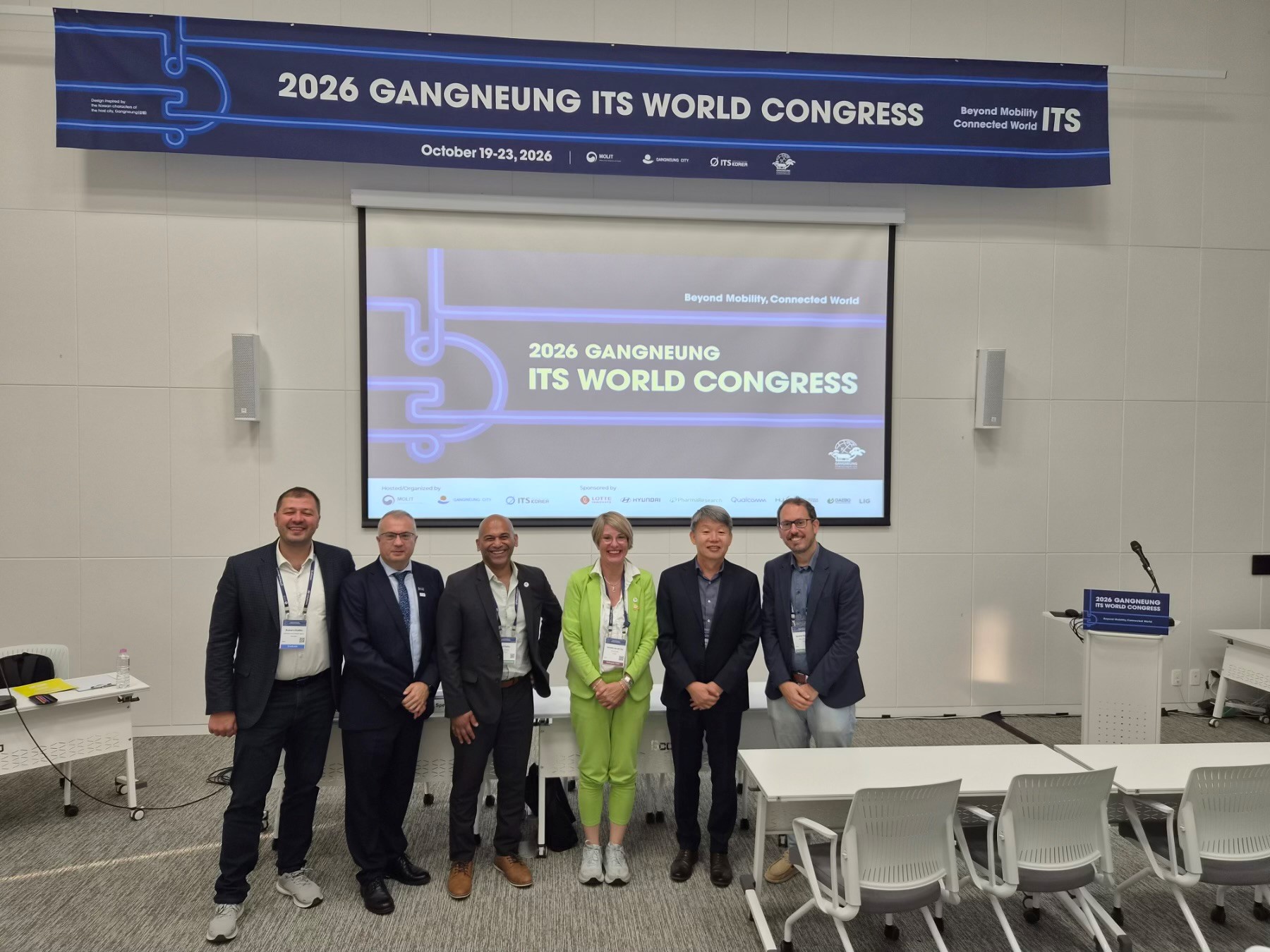
On 19 October, CulturalRoad took part in SIS008 “From Technology to Acceptance: Localized ITS Planning for Cultural, Tourism and Community Contexts” at the 2026 ITS World Congress in Gangneung. Moderated by Vladimir Vorotovic (ERTICO), the session looked at how ITS and CCAM planning can respond to the needs of tourism-driven, culturally diverse and mid-sized cities, where deployment depends on local acceptance and cultural context as much as on technical performance.
Ensuring that CCAM benefits everyone is central to CulturalRoad’s mission. The project is developing guidelines to ensure CCAM deployment is adapted to local needs, taking cultural and geographical diversity into account. As part of its co-creation framework, partners at five demonstration sites held workshops, interviews and focus groups with local stakeholders and citizens to better understand their needs and concerns around new CCAM services.
In his presentation, Rustam Khalilev (Azerbaijan Land Transport Agency) raised the question of public involvement, including whether citizens can see the outputs of digital twins and how public consultation can feed into planning.
Dr Kyu Ok Kim (Korea Transport Institute) presented how citizens are consulted on testing outcomes across 42 sandbox areas in Korea, with Gangneung as one of the test sites. He argued that planners should ask where a service adds value, for whom and under which local conditions, and that acceptance should be measured independently of technology deployment, as ridership alone cannot establish it. He also noted that more than 200 vehicles are expected in the area next year, and that the number of EVs in Korea has grown by 60% between 2024 and 2026.
Ignacio Magallón (Bax Innovation) focused on the needs of smaller cities and small use cases, covering transport poverty and workforce shortages. He also introduced the approach of the Diversify-CCAM project and shared feedback from the 12 cities where it was tested, organised around three topics: culture, geography and policy. Participants could try the project’s D-tool during the session, which is available for testing in other cities.
The discussion was broadened by Janneke van der Zee and Arif K. Rafiq from ITS Canada, who took an active part in the panel discussion, bringing additional perspectives from the Americas. They asked whether ITS is currently “for all”, pointing to shared challenges across regions, including the lack of accessible services, poor connectivity outside metropolitan areas and driver shortages.