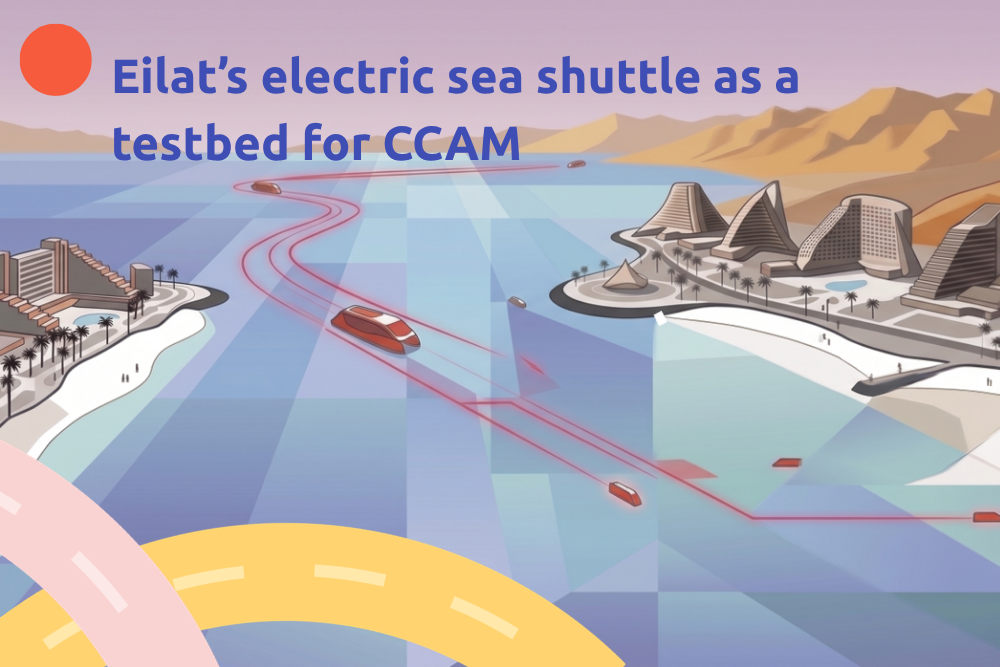
While many coastal cities struggle with urban congestion, Eilat is redefining its mobility strategy by looking toward its most beautiful resource: the Red Sea. As part of the “Eilat Electric Public Transportation Master Plan 2025,” the city is launching an innovative electric sea shuttle project that feels more like a glimpse into the future than a standard ferry ride.
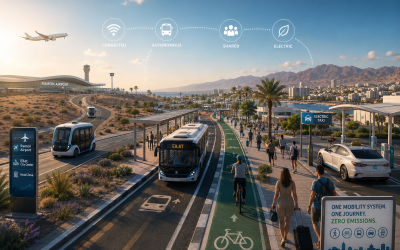
For the global CCAM (Cooperative, Connected and Automated Mobility) community, this isn’t just about getting from point A to point B, it’s a sophisticated, real-world experiment in bringing maritime assets into a digital, carbon-neutral urban grid. Imagine hopping onto a 100% full-electric vessel that glides silently across the water, powered by high-density lithium-ion batteries and supported by “Smart Piers” that double as high-power energy nodes. These terminals aren’t just docks, they are tech hubs featuring DC fast-charging (up to 180kW) that syncs perfectly with the city’s electric bus fleet.
But the real magic happens behind the scenes with the exploration of CCAM integration. Through advanced digital connectivity, these shuttles stay in constant dialogue with the city’s traffic management systems in real-time. This digital conversation allows for smarter navigation and shared data, making the journey safer and more energy-efficient while paving the way for future automated maritime adventures. Stretching 11 km from the northern border to the south, this maritime “express lane” is the heart of Eilat’s MaaS (Mobility as a Service) vision. It’s all about a seamless, breezy transfer between sea breeze and a quiet electric bus, all while keeping the Red Sea’s famous coral reefs safe from acoustic pollution.
Integrating the human dimension: the CulturalRoad co-creation journey
What makes Eilat’s maritime transformation truly unique is its role within the CulturalRoad project. While the engineering focuses on batteries and hulls, CulturalRoad focuses on the people through a structured co-creation framework. This partnership ensures that CCAM deployment isn’t just a “top-down” technical installation, but a collaborative process where the service is designed with the community, not just for them. By mapping the social and cultural nuances of Eilat, we are ensuring that our autonomous future is inherently equitable, inclusive, and built on public trust.
From stakeholder insights to community action
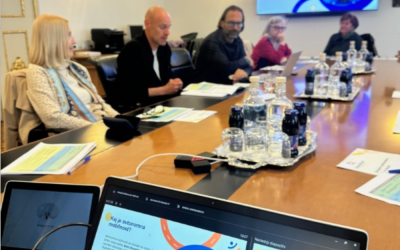
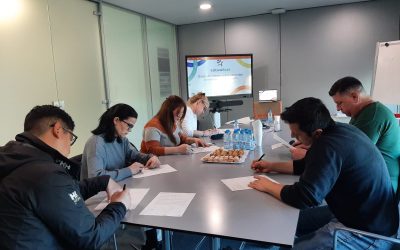
This journey is already in motion. Our demonstration site in Eilat has concluded a deep-dive round of stakeholder interviews with city leaders and industry experts, and has already hosted a first co-creation focus group workshop. In this session, local residents and potential users became active partners in the design process, sharing real-world expectations that will shape how the sea shuttle operates. This participatory approach ensures that the “Cultural Road” to innovation is grounded in the actual needs of Eilat’s diverse population.
Eilat’s initiative, powered by the CulturalRoad participatory assessment, positions the city as a premier Living Lab for maritime CCAM. By synthesising global innovation from leaders like Candela and Hyke with local stakeholder insights, Eilat is bridging the gap between European technology and urban implementation. We aren’t just solving a local transportation problem, we are creating a scalable, human-centric blueprint for coastal cities across Europe and the Mediterranean.
While these shuttles will initially operate with crew assistance, the smart energy and connectivity foundations being laid today represent a bold cross-border cooperation model for the future of automated transit. Eilat is no longer just a vacation destination, it is a global benchmark for how smart, connected, and sustainable coastal mobility can truly shine.
Image has been generated by AI.