CulturalRoad, a new project under the CCAM Partnership officially started its journey towards fair and equitable mobility. This Horizon Europe project aims to develop innovative methodologies and tools to foster more equitable deployment of Cooperative, Connected and Automated Mobility (CCAM) services for the benefit of all. By incorporating cultural and geographical diversity into CCAM deployment planning, CulturalRoad strives to enhance societal acceptance of CCAM and foster a future of mobility that is safe, efficient, and sustainable.
Recognising the need to address the increasing demand on transport and its infrastructure and reduce emissions in the sector, the European Commission has identified CCAM as a strategic area to achieve the United Nations’ Sustainable Development Goals. While CCAM allows for more efficient transport and the development of new mobility services, harmonised deployment strategies are essential to achieve the full potential of CCAM solutions. CulturalRoad addresses this challenge by developing new guidelines for CCAM implementation that consider diversity in all its aspects, involving local communities to create tailored strategies that meet their specific needs.
To assess the level of mobility equity of existing CCAM systems in their contexts and gain a better understanding of how CCAM deployment strategies impact certain segments of the population, CulturalRoad will introduce a unique Five-Pointed Star Rating System. This system focuses on five different dimensions, namely the safety of the system, its level of inclusivity, its acceptance by users, the readiness of the current network, and psychological factors influencing usage. The resulting equity score will enable the development of customised planning tools and CCAM deployment roadmaps adaptable to various cultural and geographical contexts.
The project will collaborate with public authorities, industry partners, and local communities to develop CCAM strategies that meet their actual mobility needs. This innovative bottom-up participatory approach involves all stakeholders in every step of the process through interviews, workshops, and focus groups addressing all aspects of diversity linked to the cultural context, geographic environment, and various aspects including political and economic aspects.
The CulturalRoad concept will be demonstrated at national, regional, and local levels in Barcelona (Spain), Karlsruhe (Germany), Eilat (Israel), Ljubljana (Slovenia) and the West Midlands and Oxfordshire regions (United Kingdom). The holistic methodology developed by the project will guide the development of guidelines and deployment roadmaps that incorporate diversity, boosting the uptake of CCAM services and leading to more transport equity.
John Paddington, CulturalRoad Project Coordinator, says: “Different countries, people and cultures have differing needs when it comes to transport. It is exciting to be exploring in CulturalRoad how we best serve those needs and provide advice to those considering new mobility services such as connected and automated vehicles.”
Guido Cantelmo, CulturalRoad Technical Coordinator, adds: “Autonomous vehicles are essential for reducing transport-related emissions. As for electric vehicles, a unified European effort is crucial to seize this opportunity and avoid negative societal impacts. Therefore, we must develop guidelines for effectively deploying CCAM in countries with diverse cultural, geographical, and historical contexts. At CulturalRoad, we believe meaningful change can only happen if citizens are at the centre of the discussion, and this is our goal.”
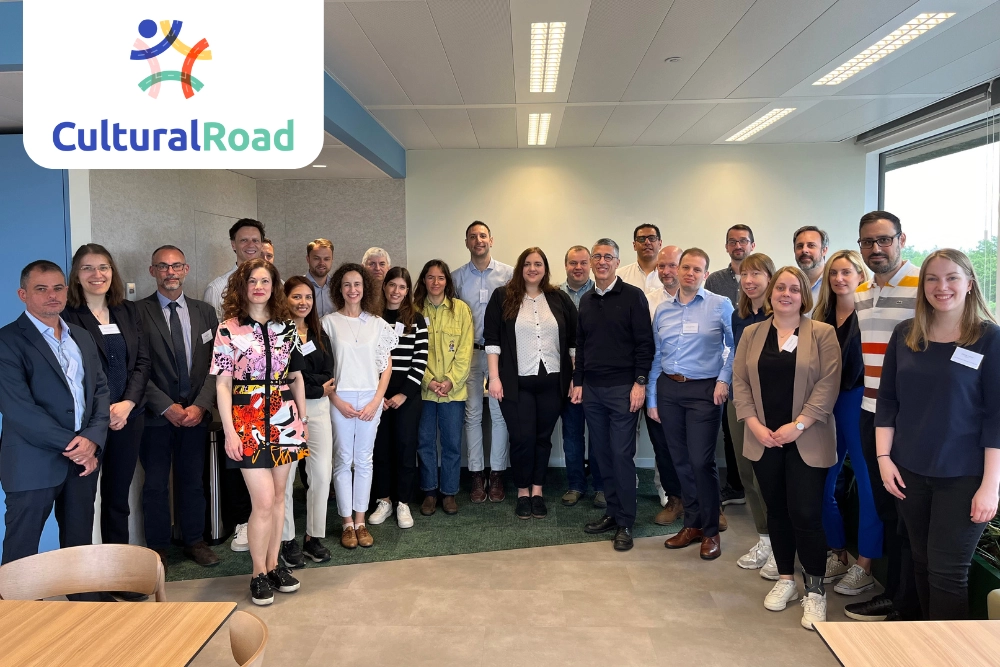
CulturalRoad is coordinated by ERTICO – ITS Europe and involves a consortium of 18 partners across 10 countries. The project was launched during a two-day kick-off meeting on 14 and 15 May 2024 in Brussels and runs from 1 May 2024 to 30 April 2027.