The first stakeholder workshop in the Karlsruhe demonstration site highlighted the importance of accessibility, trust, multilingual information, and ways to request passenger support and report issues that respect privacy within the CulturalRoad project. It also provided an initial glimpse into the virtual environment that will be used for the upcoming participatory activities. Building on these insights, the Karlsruhe Institute of Technology integrated CulturalRoad directly into teaching through a student workshop in the „Human Factors in Autonomous Driving“ course. In a series of exercises, students developed personas that represent key user groups of the Karlsruhe use case. These personas now help translate broad goals such as inclusion and equitable mobility into concrete user perspectives that can inform the next participatory steps of the project.
The student workshop
The workshop focused on a core question: which personas are relevant for the Karlsruhe region and should be considered in the design of future CCAM solutions. Students were asked to develop personas and user stories for an autonomous shuttle service in Karlsruhe, evaluate the passenger interface by reflecting on customer journeys, and think through accessibility related scenarios. In this way, teaching became part of the project’s participatory process. CulturalRoad’s participatory methodology is based on the idea that mobility services must reflect cultural, social, geographical, and personal diversity if they are to be accepted and used in everyday life. Personas help translate this principle into design practice.
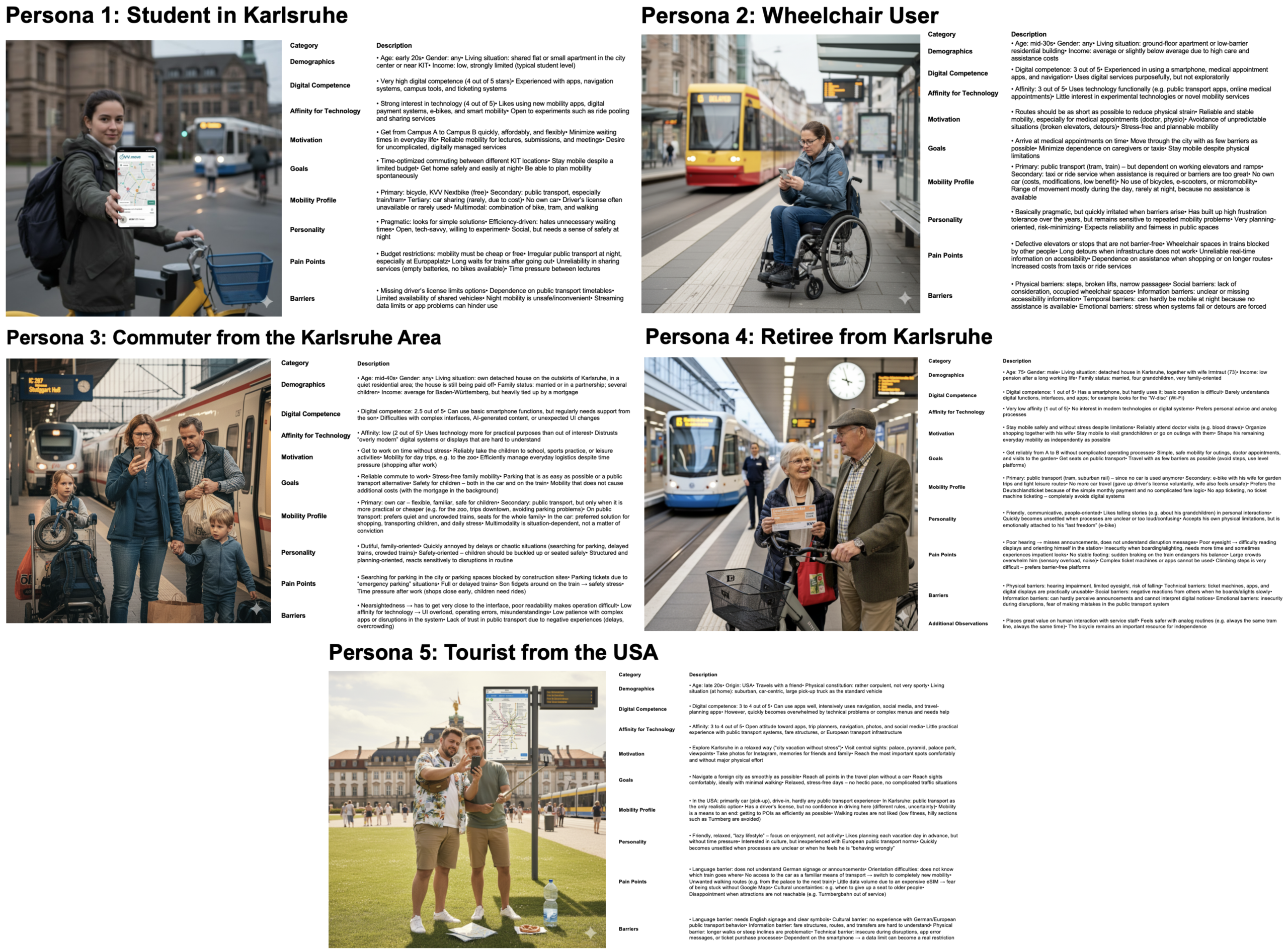
Identified personas
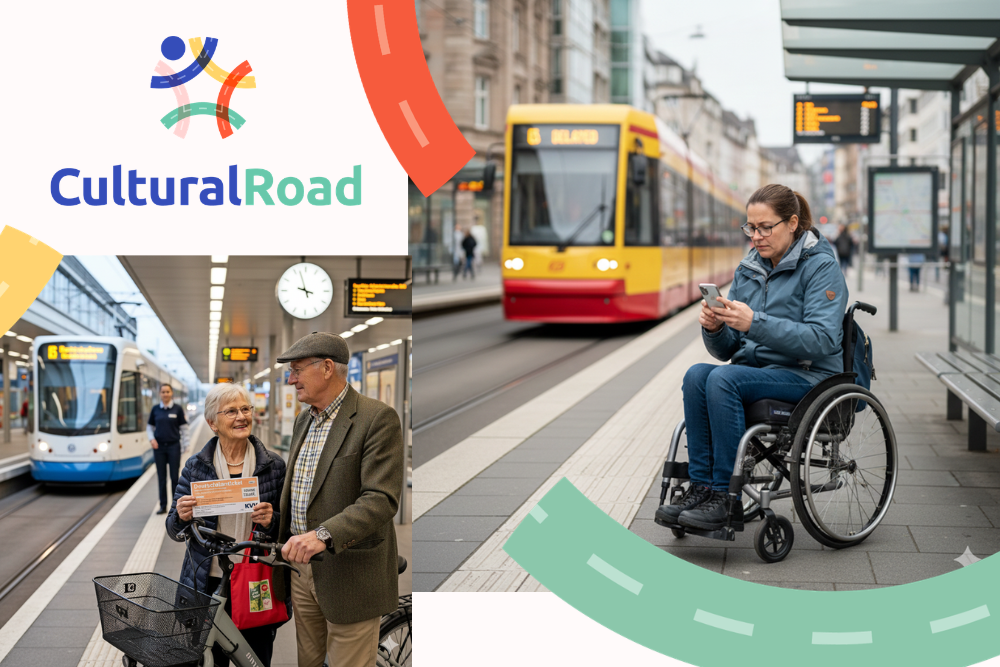
The discussions resulted in five personas that reflect very different relationships to local mobility. The first was a student in Karlsruhe, digitally confident, budget conscious, and highly flexible, but also sensitive to waiting times, limited sharing availability, and personal safety, especially at night. The second was a wheelchair user, focused on reliability, predictable journeys, and barrier free access, while facing risks such as broken lifts, blocked wheelchair spaces, long detours, and the emotional burden of systems that fail at critical moments. The third persona represented a commuter from the Karlsruhe region, balancing work and family logistics, relying primarily on the car, and showing limited trust in complex digital systems and public transport. The fourth persona captured an older adult in Karlsruhe, with low digital confidence, reduced hearing and vision, and a strong preference for clear routines, simple services, and human support. The fifth persona represented an international visitor, unfamiliar with local public transport conventions and dependent on clear orientation, plain language, and easy access to key destinations. Together, these personas made visible that the same autonomous shuttle service can be experienced in fundamentally different ways depending on the user’s resources, expectations, constraints, and vulnerabilities.
Redesigning autonomous shuttle interfaces
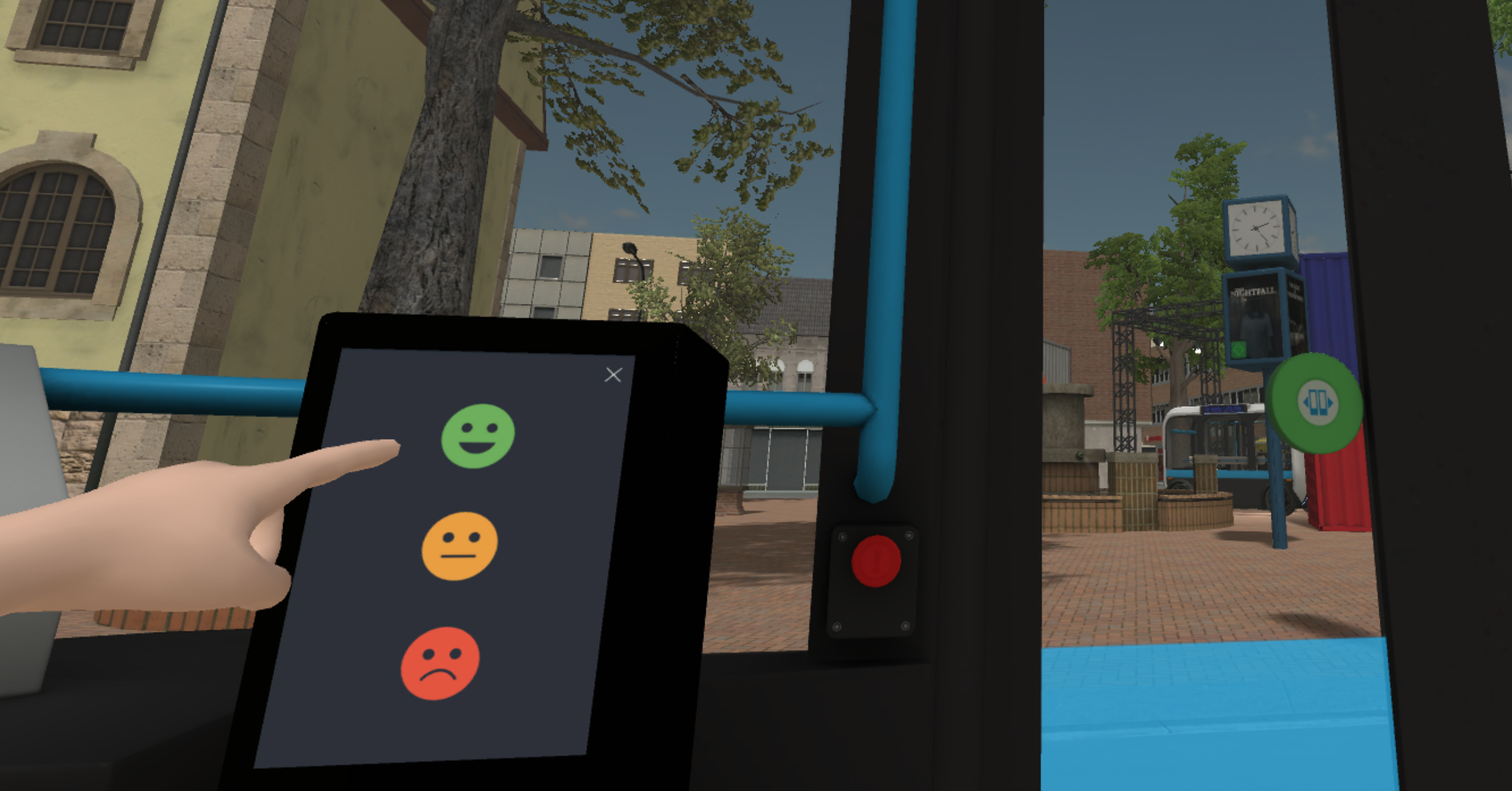
Students used the created personas in the virtual environment to evaluate an autonomous shuttle interface and identify usability issues. They emphasised the need for transparent routing, clear stop information, readable screens, multilingual support, discreet help options, and easy access to a human operator. The exercise also showed that interface improvements can exclude certain groups. Sign language avatars may be confusing for older adults, and additional map icons can help tourists but overload the display for users who need a simple overview.
From personas to co-creation workshops
For CulturalRoad, this teaching-based contribution helps to prepare the next phase of work in Karlsruhe by structuring which population segments should be considered more closely in participatory sessions. The personas now provide a grounded bridge from the strategic discussions with stakeholders to more concrete, citizen-facing design questions. The Karlsruhe use case demonstrates how education can contribute to research while also training future designers and engineers to think more critically about mobility equity. The classroom became a place where automated mobility was not imagined only as a technical system, but as a public service that must work for different people in real urban life. In that sense, the exercise delivered more than personas. It helped turn equitable mobility from a principle into a design practice.