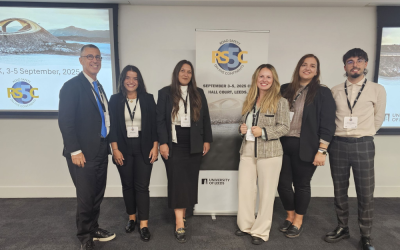
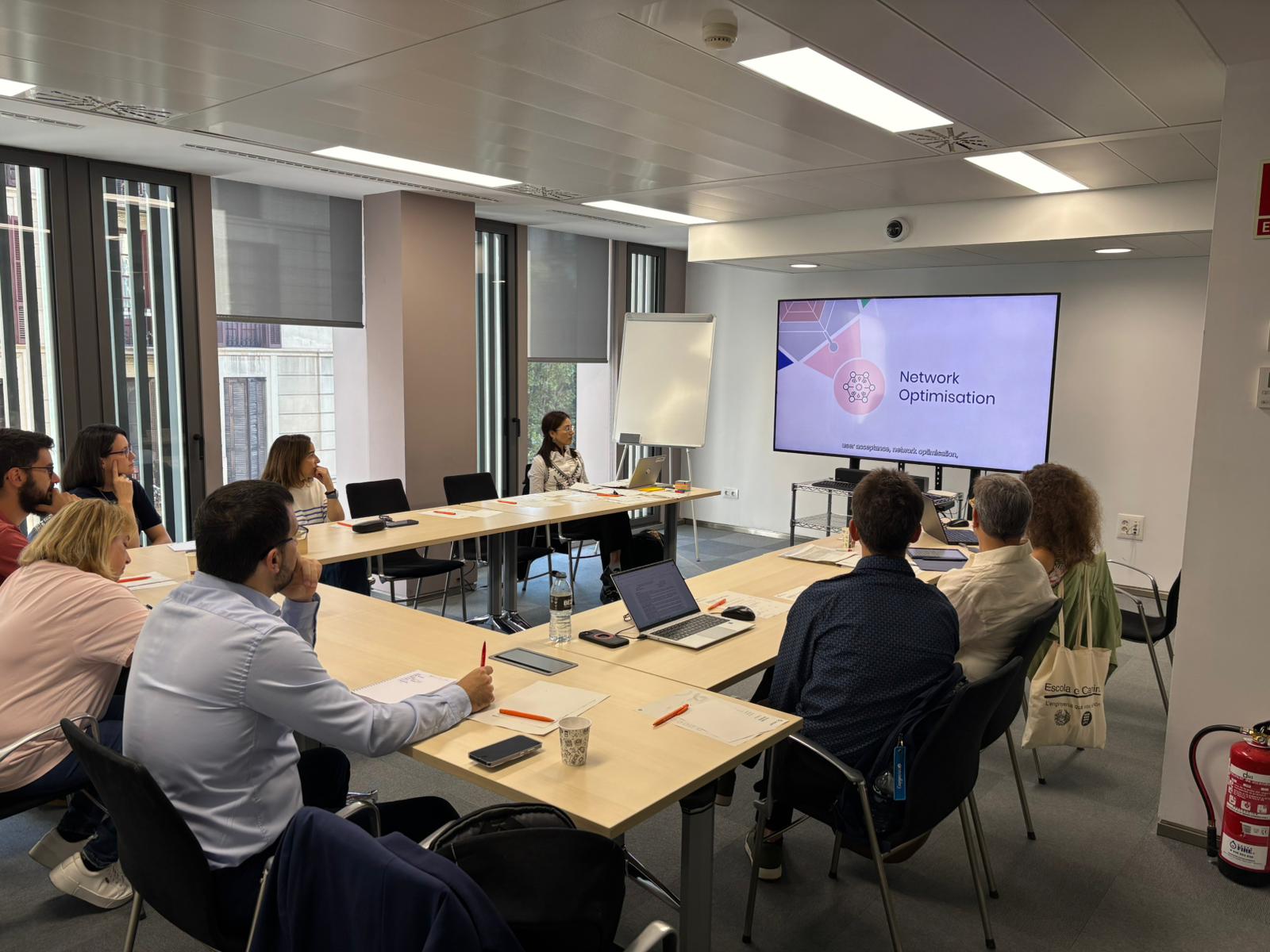
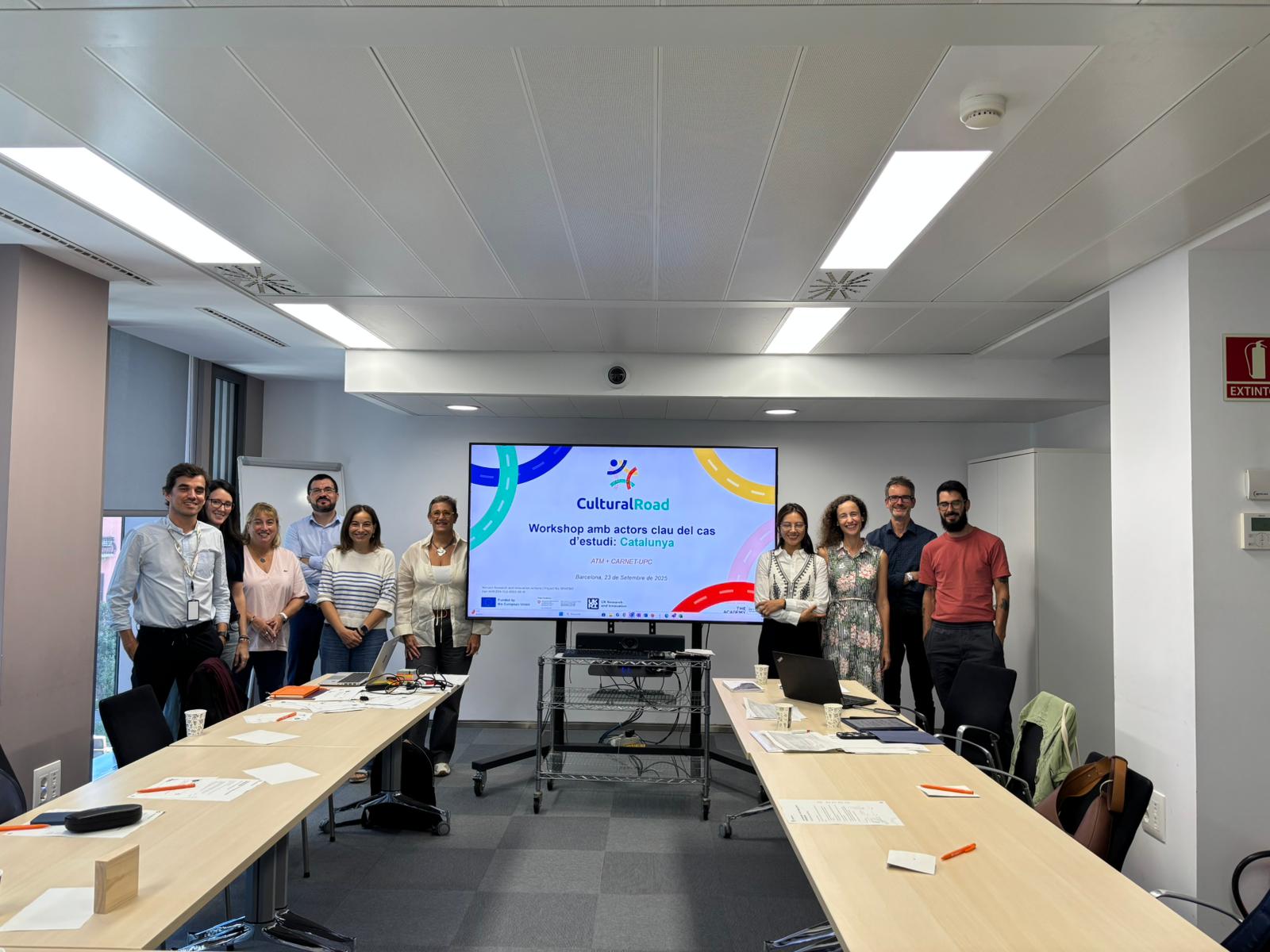
Representatives from key public authorities, technology centres, and private and public operators gathered at the headquarters of the Autoritat del Transport Metropolità (ATM) for a workshop dedicated to exploring the future of Cooperative, Connected, and Automated Mobility (CCAM) in the Catalonia Region, held in September 2025.
The workshop aimed to gather institutional visions and experiences, identify opportunities and challenges for equitable CCAM integration, debate priority actions, and foster collaboration among participating entities. Moderated by Xavier Sanyer (ATM) and co-organised by Angélica Caicedo Mafla (CARNET–UPC) and Margarita Martínez (UPC), the session began with an overview of CulturalRoad’s participatory approach, which promotes equitable and inclusive CCAM deployment across diverse cultural and geographical contexts.
Participants recognised the growing potential of CCAM technologies to enhance safety, efficiency, and sustainability in transport. References to robotaxi initiatives in San Francisco and European pilot projects illustrated rapid technological progress, as well as the potential benefits and risks arising from CCAM implementation. These reflections reinforced the need for Catalonia to advance in this field through coordinated efforts to address existing regulatory, institutional, and infrastructural barriers.
Institutional perspectives and key challenges
From the metropolitan authority side, participants expressed interest in defining clear frameworks for data collection, ownership, and sharing, emphasising the importance of ensuring that data management complies with privacy and transparency standards.
Private sector representatives stressed that a new, integrated model of mobility is required—one that is user-centred and makes full use of shared CCAM services to optimise resources. They proposed that companies should develop inclusive and sustainable mobility plans and contribute to CCAM adoption through collaboration with public administrations. However, they also noted that the pace of regulatory processes remains a major bottleneck, particularly where approval procedures and liability frameworks are still undefined.
Research and technology organisations added that, while automation in controlled environments such as port operations is already a reality, scaling up to public road networks will require strong governance and coordination among all actors involved. The fragmentation of administrative competences and the lack of interoperability between systems were identified as critical barriers. They also underlined the need to maintain a people-first approach to technological deployment, ensuring that the mobility model reflects the needs of those who move, and those who do not.
From the regional administration’s perspective, the introduction of CCAM is, at this initial stage, primarily based on road safety objectives, which constitute a key argument for promoting these solutions. It was explained that, in the short term, plans are underway to develop connected corridors, accompanied by a digital twin project and a data collection system to support future deployment. The sectors perceived as having the greatest potential are those related to freight transport, which face a shortage of personnel and could therefore adopt these technologies without major difficulties in terms of sectoral acceptance. Conversely, other transport sectors, such as taxi services, have shown greater resistance to the introduction of new mobility solutions, making it necessary to manage this transition more carefully and to provide specific support and adaptation measures for these operators.
Shared concerns: regulation, data, and coordination
Across the discussions, several cross-cutting themes emerged. The regulatory framework was universally identified as the most significant challenge. Issues of liability and responsibility in the event of accidents remain unresolved, slowing down pilot implementation and discouraging investment. Participants also noted that overly conservative regulation is pushing companies to conduct their trials abroad, with potential negative consequences for innovation within Catalonia.
Data governance was another recurring topic. Institutions expressed concerns about how data generated by vehicles will be collected, processed, and used, as well as who will have access to it. Transparent and harmonised data-sharing protocols were seen as essential to building public trust and ensuring equitable participation.
Finally, the need for coordination and interoperability among multiple public and private actors was highlighted. Stakeholders emphasised that technological maturity alone will not guarantee successful CCAM deployment; rather, success depends on establishing collaborative governance mechanisms that ensure coherence between infrastructure, policy, and user experience.
Next steps and collaborative priorities
The session concluded with a shared agreement that strengthening inter-institutional collaboration and promoting knowledge exchange between authorities, research centres, and industry actors is key to the successful deployment of CCAM. The following priority actions were identified:
- Regulatory alignment: Promote dialogue between regional and national authorities to streamline pilot authorisation and clarify liability frameworks.
- Data management frameworks: Develop common standards for data collection and sharing in compliance with ethical and legal requirements.
- Interoperability and governance: Foster coordination between administrations to enable integrated CCAM ecosystems.
- Equity and inclusivity: Incorporate social and accessibility criteria in CCAM planning to ensure that benefits reach all population groups.
- Pilot implementation: Begin with use cases in controlled or interurban environments, such as night-time freight operations, before expanding to complex urban contexts.
A step forward in CulturalRoad’s participatory process
This first stakeholder workshop marked a crucial milestone in the CulturalRoad participatory framework. Insights gathered during the session will feed into the upcoming Focus Group phase, where representatives of key population segments, such as young people, older adults, people with reduced mobility, and expatriates recently arrived in the region, will contribute to defining inclusive CCAM scenarios for Catalonia.
Through this collaborative effort, CulturalRoad and its partners reaffirm their commitment to ensuring that the transition towards CCAM is equitable, transparent, and beneficial for all members of society.