
Autonomous mobility is often presented as an inevitable next step in the evolution of transport systems, accompanied by high expectations and rapid technological development across Europe. In the Ljubljana Urban Region, however, the conversation is noticeably more cautious. Rather than focusing on near-term deployment, the region is approaching Connected, Cooperative and Automated Mobility as a learning process—one that requires time, dialogue and a clear understanding of social realities before any real-world implementation can be considered. This perspective underpins the Ljubljana pilot within CulturalRoad, which is conceived not as a technical trial or live demonstration, but as a strategic and exploratory exercise.
The primary purpose of the pilot is to prepare the ground for potential future implementation in Slovenia through the development of a White Paper on CCAM. This document will outline how such technologies could be introduced in a fair, safe and socially acceptable way, grounded in stakeholder perspectives and co-creation. By prioritising dialogue and policy learning, the pilot responds directly to the current maturity level of CCAM in the region.
Understanding Ljubljana’s mobility landscape
The Ljubljana Urban Region brings together 25 municipalities and more than 549,000 inhabitants and is one of Slovenia’s most densely populated and economically significant areas, generating over a third of the national GDP and reaching a GDP per capita of EUR 32,620. Strategically positioned at the intersection of the Alps, the Dinaric Alps and the Pannonian Plain, and located on the Baltic–Adriatic and Mediterranean TEN-T corridors, the region plays a central role in national and international transport flows.
Mobility patterns in the region are strongly shaped by daily commuting. Around 142,500 people travel to Ljubljana for work each day, most of them relying on private cars, while public transport accounts for only a small share of trips within the region, which contributes to congestion and car dependency. Although Sustainable Urban Mobility Plans have been adopted at both municipal and regional levels, and Ljubljana is part of the EU’s “100 climate-neutral cities” initiative, the technological and institutional conditions for autonomous mobility are still underdeveloped.
For these reasons, the Ljubljana Urban Region’s involvement in the CulturalRoad project is not about rolling out autonomous vehicles, but about asking the right questions early enough. The region’s objective is to understand how CCAM technologies might one day fit into existing mobility systems, what risks they pose, and under which conditions they could support—rather than undermine—long-term sustainability goals. Emphasis is therefore placed on acceptance, fairness and governance, with technological development treated as only one part of a much broader mobility transition.
Key insights from the co-creation stakeholder workshop
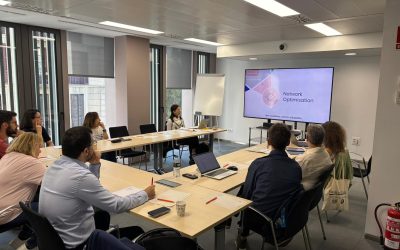
This approach is reflected in the two-step co-creation methodology applied in the Ljubljana pilot. In the first step, key stakeholders—public, public authorities, research institutions, consultants and other mobility-related organisations—are engaged through workshops and focus groups. These exchanges are designed to identify shared priorities, barriers to acceptance and the conditions required for a fair and socially acceptable introduction of autonomous mobility. In the second step, the insights gathered through co-creation are consolidated and translated into strategic outputs, most notably updates to the Regional Sustainable Urban Mobility Plan and the preparation of a White Paper on CCAM that will inform future policy development.
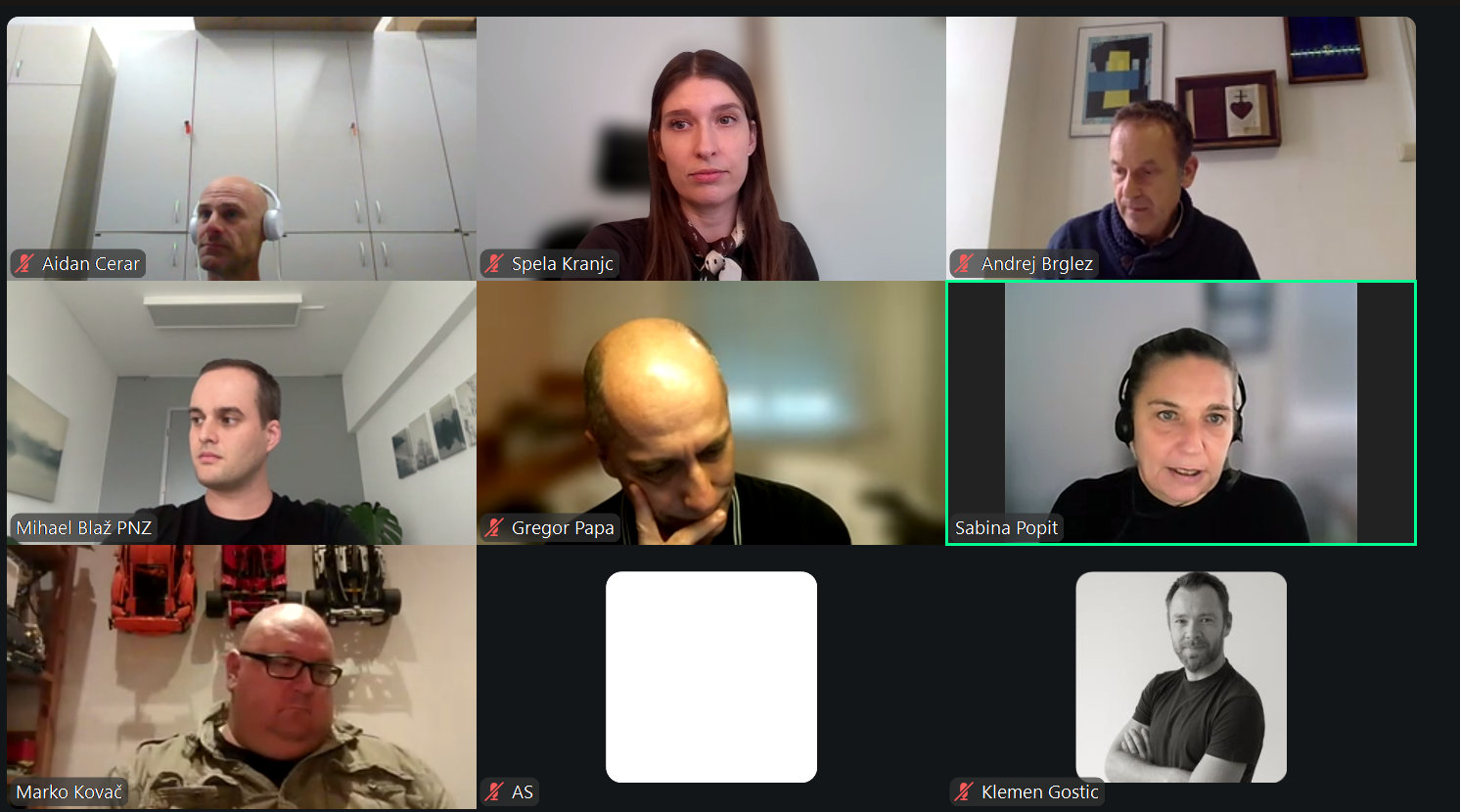
A central element of this process was an online stakeholder workshop held in October 2025, which brought together representatives from public authorities, research institutions and independent organisations active in mobility and transport innovation. The discussion revealed a shared sense of caution alongside a strong willingness to engage. Participants emphasised that technological progress often moves faster than societal readiness, and that trust, safety and public understanding must be addressed from the outset. While many acknowledged the potential of automation to reduce accidents caused by human error, there was broad agreement that even a small number of incidents involving autonomous systems could seriously undermine public confidence. This led to reflections on socially acceptable levels of risk and on transitional solutions, such as human or remote supervision, to bridge the gap between technological capability and public trust.
Concerns extended well beyond safety to questions of equity and social justice. Stakeholders warned that autonomous mobility could easily become a privilege rather than a public good if access is shaped primarily by market forces, high costs or subscription-based models. Such developments could deepen existing mobility inequalities and unintentionally draw users away from shared and public transport, increasing traffic rather than reducing it. These reflections highlighted the risk that automation, if introduced without strong public governance, could reinforce existing problems instead of addressing them.
At the same time, the discussions were not pessimistic. Participants recognised that public attitudes toward new technologies often evolve and that autonomous mobility could deliver clear benefits in specific contexts. Rural and suburban areas with limited public transport coverage and growing driver shortages were frequently mentioned as potential beneficiaries. In these settings, autonomous shuttles operating on fixed routes or in controlled environments could improve accessibility for elderly and less mobile residents and help reduce transport poverty, especially if implementation is careful, inclusive and aligned with public policy objectives.
Looking ahead: Policy recommendations and inclusive governance
In the Ljubljana Urban Region, autonomous mobility is currently a subject of exploration. The pilot deliberately creates a structured space for dialogue, reflection and learning, using co-creation to gather insights from stakeholders and end users and to translate these into strategic guidance rather than immediate pilot services. The White Paper will synthesise these perspectives, identify key challenges and opportunities, and provide policy recommendations for the introduction of CCAM in our region.
By framing CCAM as a long-term consideration rather than a short-term solution, the Ljubljana Urban Region is positioning itself as a testing ground for policy learning, institutional readiness and inclusive governance. In this sense, its work within CulturalRoad is less about predicting when autonomous vehicles will arrive and more about ensuring that, if and when they do, they serve broader public goals and contribute to a fair, sustainable and socially responsible mobility transition.